Monday, February 27, 2012

File management and workflow for translators


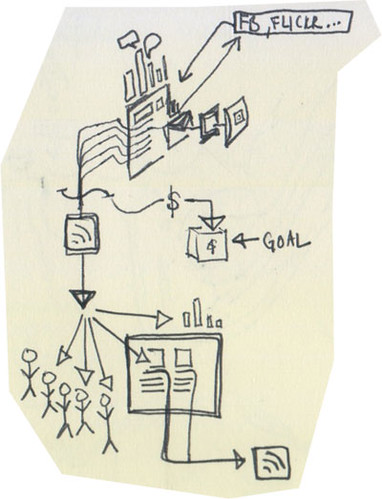
workflow diagrams for future product
Image credit: Jessica Mullen
As a freelance translator, it is essential to have good document management and an efficient workflow. Sure, it would be nice if our clients always offered us tidy chunks of work, nicely scheduled so we can keep all our various jobs and deadlines easily organized in our mental filing cabinets, but alas such is rarely the case. One moment you are chugging pleasantly through a few good sized jobs with reasonable deadlines, and then in the space of an afternoon, six clients call you for small jobs with deadlines ranging from “yesterday” to “sometime next week is fine.” If you don’t have a good workflow and file management, one of these will inevitably get lost in the shuffle—until your client calls, wondering when you plan on delivering that document you promised last week. 

So it occurred to me that other translators might find it interesting and/or beneficial if I documented my own workflow, something I’ve honed over the years and that I now find pretty effective. Of course not everyone has the same client mix, faces the same workload, or uses the same programs, so your mileage may vary. I’d be happy if other translators chimed in in the comments.

File management

Let’s start with file management. I maintain a nested file hierarchy that goes something like: Year/Client/(Project Manager)/Project/files. I doubt this is particularly revolutionary. The normal file hierarchy for the current year and that of the previous year go into my Dropbox folder. (The free 2 GB account is generally sufficient for two years’ worth of files; after two years, I transfer the year’s files into my archives.) In my Dropbox folder, I also keep a separate folder—outside of the year-by-year hierarchy—called “Current Projects,” into which I place an alias (or, for Windows users, a “shortcut”) of all current project folders. This gives me quick access to the documents I’m working on: with a couple of keystrokes, I can be looking at all my current ongoing projects. And because it’s Dropbox, I know that my files will be synced between my desktop and laptop.  

Workflow

As for workflow, when a client emails me a document, the first thing I do (after replying to say I’ve received the file) is hit the keyboard shortcut for “Save Attachments.” In the Save window, I navigate to the Client folder (and PM folder, if necessary), create a new folder for that project and save the file(s) in it. Once that’s done, I use another keyboard shortcut to automatically create an alias of the new project folder in the Current Projects folder. And finally, I open my to-do list (I’m currently using iProcrastinate, but I’m looking around for something more elegant) and enter the project name and due date. The beauty of this system is that with keyboard shortcuts (more on that in another blogpost), all this takes about 15 seconds, so it’s not burdensome in terms of time. This is important, because if you’re already working to a tight deadline, the last thing you need is to spend extra time fiddling with an inefficient workflow. If it takes too much time, there’s a chance you’ll put it off for later, and we all know what lies at the end of that tragic path.

Once the project is finished, I create an invoice and save it to the project folder for easy reference. After sending the completed translation and invoice off, I delete the alias from the Current Projects folder and mark the project as completed on the to-do list. If for some reason I don’t bill the client immediately, I don’t delete the alias and use a colour label on the folder to indicate that it hasn’t yet been invoiced.

I’m sure other translators have developed other systems, and as I mentioned earlier, I’d love to hear from you if you have anything to add or can suggest an improvement. Today’s global economic climate is putting pressure on translators to decrease or at least maintain rates at current levels; one way we can counter this is by increasing our productivity, and having an effective workflow is a step in this direction.  

Wednesday, February 22, 2012

Music = Language


I just finished listening to this week’s Quirks and Quarks, and the last interview was with neuroscientist Gary Marcus, who was discussing his new book Guitar Zero. You can listen to the Q&Q segment here. The book is about music and the brain, and how “nonmusical” adults can learn to become musicians, among other things. 

I should start by saying that I haven’t read the book, but it sounds like an interesting read. That said, I was struck by something Marcus said during the interview. He touched on the idea of whether or not music, like language, is innate in humans. He posited that unlike language, music isn’t “built in”; that while all children learn language naturally at an early age, not all children are musical; he suggested that music is more like reading, something that just about everyone can do given enough dedication and practice, but not something that is necessarily an instinct, as it is in, say, songbirds.  

Listening to Marcus talk about it, he almost had me convinced. If you put a bunch of kids in a beginner band, some will be better than others. Some have more “talent”; or as Marcus puts it, some have more of the genes that predispose people to have musical ability. And all this is true. The problem with his thesis is that he considers music and language separately. 

But they’re not separate at all. Music is a language. Of course some people will have more musical talent than others; we all have various talents that are different from those of others, and this is true of spoken language too. Some people express themselves verbally very well while others have trouble putting two sentences together without stuttering or stumbling over a word. Not all of us will become great orators, no matter how hard we practice, but we can all speak, and we can all communicate with others. 

The thing is, we are all exposed to spoken language constantly from the day we are born. We practice speaking almost as soon as we are born. Of course we get good at it from a very young age, especially if we’re hardwired for it. But I would suggest that Gary Marcus carry out the following thought experiment. Give a young child a flute or some other small instrument, and limit the sounds to which that child is exposed to other people playing that instrument—in other words, the child’s only method of communication is by way of the flute. How would that affect their musical skills, irrespective of their musical talent? Now, do the same thing with a baby chimpanzee. I wonder if the chimp would learn to play the flute. On the flip side, what if the child were allowed to listen to spoken language but not allowed, or not given the opportunity, to speak. How would this affect their verbal skills?

Obviously these experiments could never be carried out in the real world, and yet in one sense we carry out one of them constantly. Most children are exposed to music all the time (on the radio, at concerts, etc.) but a great many of them never get the opportunity to play an instrument. Music programs in schools are often the first things on the chopping block when budgets are cut, and unfortunately there is an increasing divide between listeners of music and performers of music. Unlike spoken language, where we encourage children to speak even though their first words are practically unintelligible (in fact, we find it adorable, right?), with music, when children try to sing or play an instrument they are often actively discouraged because, surprise surprise, they’re singing or playing out of tune or with poor rhythm—making a horrid racket. 

In the interview, Marcus mentions that while a baby bird will learn to sing in pitch and rhythm in 90 days, young children aren’t usually very good at singing, and even at age two do not really understand much more than consonance and dissonance. There is truth to this, as anyone who has heard a kindergarten choir sing knows. But nor are two-year-olds particularly good speakers. They often have trouble expressing themselves, will mispronounce words or will approximate phonemes. It’s normal because they’re learning. So it seems pretty obvious that although we seem to have a hardwired instinct for language, it’s still something we have to learn—but this is true of music as well.

If we’re exposed to English as children but not French, we’ll learn only English. But as many mixed-language parents of children here in Quebec know, if a child is exposed to both French and English, they’ll pick up both very easily. Similarly, if they’re exposed to music—and they’re encouraged to play music—from a young age, they’ll learn the language of music too. But when you pick up an instrument as an adult, it’s like learning a foreign language. With practice, you can become proficient, but you’ll never speak it like a native; music will never be your mother tongue.

The concept that scientists like Marcus seem to have trouble wrapping their heads around—something that all musicians know instinctively—is that while we think of music as an art, at its very foundation, it’s really just another language. So I find it very frustrating when they say that while language is built in, music is mere something that is learned, when it’s clear that both come from the same place.

Saturday, February 18, 2012

The Internet and the comeback of live music


A few days ago, one of the people I follow on Twitter posted a link to a 2011 documentary called Press Pause Play. It’s a film about the democratization of art that the Internet has brought about, and it asks the question whether this is a good or a bad thing: does democratization lead to better art, with more artistically inclined people having better access to the tools to create and distribute their art, or does this democratization cause the best art get lost in a vast sea of mediocrity?

Wherever you come down on this debate, it’s a thought-provoking film. Not surprisingly, it deals mostly with the music and film industries, illustrating the many ways in which technology has made it trivially easy to create a song or a film and distribute it online, even for people with limited knowledge of those arts. Some critics, notably the British writer Andrew Keen, say that this “cult of the amateur” (the title of one of Keen’s books) is potentially the downfall of culture, and in the film he states that today, a young Scorsese or Hitchcock wouldn’t make it, that their early creations would “get lost in an ocean of garbage.”

I’m not sure Justin Bieber would agree. Neither would niche artists such as Sophie Madeleine (yes, I’m a fan). Of course the Rebecca Blacks of this world will always be there to add ammunition to Keen’s arsenal, but on the flip side, I remain of the firm opinion that across the board—be it in the jazz, classical or mainstream pop genres—the so-called “music industry” (i.e., the huge corporations that have funded a large proportion of the recordings made over the past century) has left a great many supremely talented artists behind in favour of promoting supreme mediocrity (hello, Brittany Spears), and that the current democratic state of affairs offers greater numbers of artists with real talent and determination a better opportunity to rise to the top. 

Another thing the film touches on is that because of the effortless distribution afforded by the Internet, recorded music is becoming increasingly commoditized, to the extent that it has become almost worthless. People share mp3 files without a thought; music streaming services now provide access to millions upon millions of tracks for a trivial fee; even downloading songs from iTunes is incredibly inexpensive in today’s dollars (older readers might remember days when a CD cost upwards of $20—a lot of money in 1985). In parallel with this commoditization of recordings, there is an apparent increase in the value of live performances. A fan might download a group’s recordings, but real fans go out to the concerts. And if you haven’t noticed, the price of a concert ticket, whether for a pop act or for the opera or symphony, has risen enormously. (By way of comparison, ticket prices for a Montreal Canadien’s game range from about $40 for the super-cheap seats to about $400 for the ultra-premium seats; surprisingly, tickets to see the Orchestre symphonique de Montréal have a similar price range, though the upper end peaks at around $240). This is partly because it costs a lot of money to put on a live show; but I believe it’s also because live music is becoming increasingly desirable and valuable. 

Why is this? Partly, it’s because recorded music is an abomination.

Perhaps it's shocking that a musician might say this, but I have believed it to be true for a long time. Music is an ephemeral art. Part of its allure is that no two performances are (or should be) alike. This allows familiar pieces to be heard as if for the first time. It is what allows musicians to play the same song over and over again with delight. It’s why it’s so wonderful to hear songs performed in styles and genres other than their original intent. But when we record music, we trap it in purgatory. We start to focus on eliminating all the small imperfections in tuning, articulation, tempo—all the small, almost imperceptible, errors that a performer might make while expressing their heart. For lack of a better term, we take away the music’s soul. The only exception is the live recording, and even here, I think it’s a musician’s nature to listen to such a document and be disappointed by the “mistakes,” even if the concert was highly successful. The only recording that music deserves is the one in our memory. This is where the truly great performances should reside, and where they did reside for most of the history of Western music. 

The other problem with recorded music is that it removes another, often overlooked, part of music: its social aspect. Most of the time nowadays, when we listen to recorded music, we are alone. We’re in the car, or we’re listening to our iPods, or we may even be at home with music playing on the stereo. But rarely do people sit down anymore and just listen to recorded music with other people. If there are other people around, it’s because the music is playing in the background and we are doing something else. But if we are actually listening attentively to recorded music, it’s very likely we are by ourselves. 

But at a live concert, we are with other people, and we are all listening to the performance. It’s a social event, and there’s no doubt that one of the reasons we believe that a great concert was a great concert is because we experienced it with others: the music brought us together somehow; it was a unifying event; to use an intentional pun, the music touched a common chord. And for musicians, a significant part of the appeal of performing is that you’re doing it with others, often with people who are good friends. The experience of music creates an emotional bond between people that I feel is often overlooked and poorly understood.

Before the advent of recording technology, live music was performed because that’s the only way music could be heard. Even in the early days of recording, you couldn’t create music electronically; it all had to be recorded. A lot of musicians made good livings in the mid-20th century because the only way to achieve the sound of a string section was to actually record a string section playing. As recording, synthesizing and sampling technologies improved in the latter part of the last century, more and more session musicians lost their jobs, and musicians began to wonder if there was any future for them in the “music” business. 

But with the commoditization of recorded music, musicians and the music industry itself would do well to recognize that the whole “recording craze” may well have been a blip on the graph. Music’s very ephemerality is what makes it valuable, and it is only through live performances that people truly experience why music is a supremely human endeavour. The recording industry has had its day, and will likely always have a place, but I believe that the pendulum is starting to swing toward a more balanced position, where live music is once again achieving a place of prominence in our culture. And if the Internet has played a part in accelerating that swing, then I for one am all for it.

Wednesday, February 15, 2012

Kraken


I just finished reading China Miéville’s novel Kraken. Let me foreshadow my critique by saying that his most recent novel, Embassytown, is already on its way to me from Amazon. It will definitely be among the books I read this year.

Since Kraken is only the second Miéville novel I’ve read, it’s hard for me to know where to place it on the Miéville Weirdness Index. Certainly, The City & the City was out there, but at its heart it’s a detective novel, and once you get your head around the premise, the weirdness fades away somewhat. But I suspect Kraken falls higher on the MWI than The City & the City. Assuming the MWI is logarithmic, like Richter scale, with each successive MWI number being 10 times weirder than the previous one, then if The City & the City is, say, 6.8 on the MWI, I think Kraken must be at least 7.5, if not close to 8.

Which is not to say it’s not a really enjoyable novel. Miéville is just a fantastic writer: so poetic and original, and yet very readable. I particularly love the way he approaches dialogue. So often I feel that writers change the way characters speak to make it easier for the reader to follow. But Miéville’s dialogue is completely and often jarringly natural (if that makes any sense). The effect is that the dialogue seems to flow better, but sometimes it’s harder to follow because he’s using spoken rather than written syntax. It makes the reader work a little harder, but it lends authenticity to the characters.

The novel is set in London, and the characters are unapologetic in their Londonness. If you haven’t been exposed to at least some Cockney rhyming slang, you may find yourself wondering what the hell is going on some of the time. My grandfather was Cockney, so I was able to pick up on some of that; even so, there were times when I knew I was reading a local idiom but didn’t catch precisely what it meant. I love that. Miéville is British, and he didn’t dumb down the dialogue for English readers outside of Britain. This may put some readers off, but I think the novel is far better for it. 

The basic premise is that there’s a vast underground scene where certain people have special powers (or “knacks,” as Miéville calls them), of which the “muggles” are completely oblivious. There is also a plethora of cult religions, among them the “Krakenists” who worship the giant squid (see where the weirdness is going now?). In parallel with these knackers and cults is a special and very secretive police unit called FSRC (the Fundamentalist and Sect-Related Crime unit) that keeps tabs on all these strange goings on. When the giant squid housed at the London Natural History Museum goes missing, it turns out to be a big deal to the Krakenists (whom everyone suspects are the perpetrators) and a sign of the impending apocalypse. I know it all sounds very strange and improbable, and of course it is, but Miéville has a knack (see what I did there?) for drawing you in and making the weird seem almost normal.

I wouldn’t recommend Kraken or Miéville to just anyone (you don’t end up being categorized as part of the New Weird genre by being particularly accessible), but if you like speculative fiction or fantasy, or if you’re a fan of excellent and highly original writing, then you’ll probably enjoy Kraken. 

Tuesday, February 14, 2012

Translation twilight zone

Primeiro oob - Entrando na Twilight Zone
 Entrando na Twilight Zone - Photo Credit: marcusrg


I’ve been translating for a living for about 15 years now, so I guess you could call me an “experienced translator.” I have a bevy of regular and loyal clients, at least one of whom has been with me since the very beginning, and several others who have been with me for over 10 years. It’s a strange business where you can work with people for years, talking on the phone, exchanging emails, and never once meet with them face to face.

In general, it’s work that I enjoy: it can be challenging and creative, and I greatly appreciate the flexibility of self-employment. That said, after 15 years, I’ve had to deal with pretty much all the common problems, both technical and business-related, that a translator will typically encounter. And while I don’t mean to complain, one of the things that really weighs me down is having to constantly work with at best mediocre, and often downright execrable, source texts. 

Most people are not writers, and as a language professional, I am all-too-often expected to produce silk purses out of sows’ ears. It has gotten so bad of late that I have begun to wonder if I shouldn’t start looking for a third career. As I said, I like my work for the most part, and the idea of going out and finding a “real job” is horrific to me. But I feel a little like I’m stuck in a professional Sargasso Sea, a Bermuda Triangle, a translation twilight zone, if you will, and I’m not quite sure what to do about it.

So I was overjoyed today to get word of a really exciting project that, if all goes according to plan, I will soon be a part of. I can’t provide any details right now, but once things get started, I hope to be able to blog about it. I can say that it would be a real feather in my professional cap, and my work could be read by hundreds of thousands of people every day.

It all began when one of my occasional clients recommended me for this particular project. The new client in turn asked me to do a test translation. I don’t normally do test translations for free, but I made an exception this time because the project looked interesting. The test had two parts, one more literary in nature, the other more technical. Both test texts were well written and fun to translate, and, not to sing my own praises (well, maybe a little), I really nailed them, especially the literary text.

That was a couple of weeks ago. Then today, I heard from the client, and they told me they were very impressed with my work and were eager to work with me. The hitch, as is so often the case, is that the money isn’t quite as good as I had hoped (though it’s not insulting either). But since I am generally willing to give a discount for volume, and this project will potentially stretch over three years, I told them I’d be willing to be flexible on my rate if they could meet me halfway. I’m optimistic things will work out.

It’s been some time since I’ve been this excited about a project, and I must say that it’s always stimulating and motivational when a client or potential client praises your work. But most of all, I’m very much looking forward to translating some well-written, meaningful writing. I think this contract could be just the tonic I need—a wind in my sails to propel me through these professional doldrums.

Wednesday, February 01, 2012

The revenge of the mortal hand

By Mariusz Kubik, http://www.mariuszkubik.pl (Own work, = Kmarius) [Attribution, GFDL or CC-BY-3.0], via Wikimedia Commons

And so another month begins, and it begins with the death of one of our great poets, Wisława Szymborska, a Nobel laureate and a fascinating writer. She was 88 and apparently died peacefully in her sleep. Even though she gained much more fame after winning the Nobel Prize for literature in 1996, she remains virtually unknown outside Poland. Even among poetry buffs, she is hardly a household name. And more’s the pity. She was a truly great writer.

I still remember the first poem of hers I encountered: The Joy of Writing. There are several translations of this work, but I have yet to encounter one I enjoy as much as the excellent version done by Magnus Kyrnski and Robert Maguire in the collection Sounds, Feelings, Thoughts. The poem perfectly captures the incredible feeling of power that can inhabit you as a writer; the amazing world of possibilities open to you, if only you let your imagination run free; and the sense that maybe, in some small way, you are reaching across time to touch the future. I was completely blown away by it. 

I have not the slightest knowledge of the Polish language, but I love this translation. My instincts as both a poet and a translator tell me that it’s fine work. Compare it with this one, by Stanislaw Baranczak and Clare Cavanagh, whose translations of Szymborska seem to be generally well received. And yet there are strange little unpoetic slips in the B/C version. Take for instance “xerox her soft muzzle” instead of K/M’s “copy her gentle mouth like carbon paper”. The latter is longer, but how can one seriously reconcile the word “xerox” with “soft muzzle” in English? There is an alliteration of the "z" sound in xerox and muzzle, but the all those z's and x's aren't very doe-like. Or BC’s “perched on four slim legs” versus KM’s “poised on four fragile legs”. Again, I don’t know what the Polish says, but I know I like “poised” better than “perched” and “fragile” rather than “slim”. I could go through the whole poem like this, but it would get boring. To be fair, I think both versions have their strong and weak points, as any translation of poetry will have; and I have always felt that to truly get a feel for a poem in translation, one should read several interpretations if possible. But the KM version flows beautifully for me and works well in English. I’ll leave you to make your own conclusions. I’ve certainly made mine.


The Joy of Writing
      Wislawa Szymborska (translation by Magnus Kyrnski & Robert Maguire)

Where through the written forest runs that written doe?
Is it to drink from the written water,
which will copy her gentle mouth like carbon paper?
Why does she raise her head, is it something she hears?
Poised on four fragile legs borrowed from truth
she pricks up her ears under my fingers.
Stillness—this word also rustles across the paper
and parts
the branches brought forth by the word "forest."

Above the blank page lurking, set to spring
are letters that may compose themselves all wrong,
besieging sentences
from which there is no rescue.

In a drop of ink there's a goodly reserve
of huntsmen with eyes squinting to take aim,
ready to dash down the steep pen,
surround the doe and level their guns.

They forget that this is not real life.
Other laws, black on white, here hold sway.
The twinkling of an eye will last as long as I wish,
will consent to be divided into small eternities
full of bullets stopped in flight.
Forever, if I command it, nothing will happen here.
Against my will no leaf will fall
nor blade of grass bend under the full stop of a hoof.

Is there then such a world
over which I rule sole and absolute?
A time I bind with chains of signs?
An existence perpetuated at my command?

The joy of writing.
The power of preserving.
The revenge of the mortal hand.

Tuesday, January 31, 2012

Empty page


The empty Book
The empty Book  Photo credit: Kazi Hirok Al-Arafat (Bidrohi)  
And so I come to the end of the first month of my “Resolution 2012” project. The result? Just a tad over 11,000 words written—no great shakes, really, but not bad for a start. I had a few “placeholder” days, where I didn’t really write much of anything, though surprisingly, when I look back among even the placeholder days, only one of them was truly a I don’t have time to write anything today kind of entry, and there were only five days that I wrote fewer than 200 words.

But more importantly and surprisingly (to me, at any rate), I actually wrote two poems in the month. Neither of them are ready for primetime, but frankly, I can’t remember the last time I had two ideas for poems in a month. When I first started taking poetry seriously, I was writing 20–25 poems a year, but I haven’t written more than half a dozen annually in quite some time. So two in a month is astoundingly prolific for me. 

Then of course I wrote a number blog posts. With five posts here at Far From the Madding Crowd (including this one), I have surpassed my production for all of 2010 and equalled the total for last year. I also wrote three posts over at Singing the Apple, which equalled my production in 2009, the last year I posted anything at all on that blog. So, eight blog posts for the month. I’m quite pleased with that, even if not all of it was riveting stuff.

And finally, a pipe dream: I sketched out the framework for a historical novel. This actually took up quite a lot of my writing time, as it entailed a fair bit of research. I have no idea where this will lead. I may end up getting bored with it and abandon the whole thing. My problem is that while I have come up with what I think is a pretty neat background and overall structure, I have no idea what sort of story to write. I think you’ll agree that this is a serious problem for a prospective novelist. So my intention is to just keep on digging into the history of the period and see what comes up. I’ve created a few fictional characters to go along with the historical figures, but I need something for them to do. History is fine, but there needs to be some other intrigue to keep the reader interested. This is where my imagination has failed me thus far, but my hope is that, like with the poetry, if I keep whittling away at the novel the muse will whisper something in my ear.

As I’ve been telling myself all month, only time will tell. But if this month is anything to go by, there’s reason to be hopeful.

Wednesday, January 11, 2012

Och Islay!


One of the traditions I indulge in when I head out west to visit my family is to stop at the Kensington Wine Market and pick up a few bottles of scotch. It’s the best place I’ve found to buy whisky in Calgary, and maybe one of the best in Canada. Certainly, the selection, prices, and the knowledge of the staff are all far better than anything in our pitiful state-run liquor stores here in Quebec. 

This Christmas, I picked up a bottle of one of my favourite whiskies, Springbank, and I “sprang” for the 18-year-old version. So far I must admit being mildly disappointed. I’ve had quite a few expressions of Springbank over the years, and I’ve enjoyed them all, but with this one, I had hoped for something approaching the memorable half bottle of the 21 year old I brought back from Scotland in 1999. Don’t get me wrong, it’s lovely. But it’s not as intense as I had hoped. 

On the other hand, the other bottle I bought is nothing if not intense. The nice thing about the KWM is that if you state your intention to buy something, they are usually quite willing to give you samples of whatever happens to be open in the back. This year, the guy working the scotch section (who looked to be about 17 years old but whose knowledge of and enthusiasm for scotch was breathtaking) had me taste a scotch blind that knocked my socks off. It was peaty in a way I had never tasted before—almost cigarette smoke-like, but not unpleasantly so. It had a very unusual and intriguing mix of peat and sherry flavours and aromas. My curiosity was instantly piqued. When he told me what it was, I was pleasantly surprised. When he told me the age, I was floored. 

Are you waiting with bated breath? (OK, I guess not, since there's a picture of it right there.)

It was from Kilchoman, the youngest distillery on Islay, and first new one in 124 years. When my wife and I were on Islay in 1999, I remember the locals talking about the plans for this new "farm distillery" out on the west coast of Islay. I think we even went out to see the site, near Machir Bay. It’s only been up and running for about five years, but they have already distinguished themselves by growing some of their own barley and by being one of the few distilleries in Scotland to do their own traditional floor malting. 

And my god, you can sure taste it in the whisky. This particular expression was a single cask, cask-strength, unchillfiltered bottling that was exclusive to the KWM. The kicker? It was all of four years old. I was blown away by the maturity of this whisky after so short a time, and by the complexity it had picked up from the sherry cask. In another five or six years, once some of the first production hits 10 years old, this is going to be astonishing whisky. 

I, for one, can’t wait. I haven’t been this excited about a whisky in a long time.

Wednesday, January 04, 2012

Day 4: 2,500 words, but who's counting...


I suppose at some point I’ll have to address the lack of poetry—or even poetic inspiration—thus far, although to be honest, it’s only Day 4. Even in my poetry-writing heyday, I rarely wrote more than a couple of poems a month, so I suppose there’s no reason to panic just yet on that front. Again, the idea is that by getting into the habit of writing, the muse will start visiting more regularly, and perhaps she will even deliver some poetry to me. 

For now, I’m satisfied with just writing something down. And while this blog is as good a place as any, it occurs to me that I started another blog a while back as a place to post my thoughts about tech issues. Frankly, given its dilapidated state, I’m surprised Google hasn’t just deleted it, citing Internet building and upkeep codes. So try not to fall off your chair in surprise when I tell you that if you head on over there now, you’ll find a new post about my experience with the iPod nano 6th Gen.

Also, since I'm around more often, don't be surprised if the look of this blog changes. I don't think I've modified the layout since I started it in... um... 2004 (really?). Perhaps a little redecorating is in order. 

Monday, January 02, 2012

Day 2: God help me!


It’s only Day 2 and I find myself struggling. I guess it’s not that surprising, given how rusty my creative muse is. One of the premises of this project is that it should get easier as time goes by; with any luck, it will get much easier very quickly. If not, well, I left my resolution pretty open for just that contingency. By not specifying the form, length or quality of the writing, I hope to have relieved some of the pressure. In fact, I could stop here if I really wanted to and will have completed my goal for the day. 

But I won’t stop there. Something will come. For instance, I could write about Scrivener, a “content-generation” program I recently downloaded. It’s mainly designed for long-format writing, but as I wade through the detailed tutorial, it seems as though my hunch that it would be good for this sort of project too was correct. It’s probably overkill for a “write every day” project, but, on the other hand, if over the course of this year I decide to embark on something bigger (dare I utter the word “novel”?) or perhaps compile a collection of poetry for some sort of publication project, Scrivener should be able to handle the job. At worst, it’s a great way to keep track of everything I’ve written for my “Resolution 2012” project. 

It’s going to take a few days to get through the tutorial, but I think it will be a worthwhile exercise; there’s so much muscle under the hood of this program that it would be a shame to not learn more than the basics, especially since, in this era of $1.99 iPhone apps, it’s a relatively expensive investment at $45. Thus far I’m enjoying its flexibility, and I think it will be worth spending some time customizing a few keyboard shortcuts to agree with the ones I use in Word. 

But I’m not sure how many blog posts or free writing sessions I’ll be able to justify by writing about a program I bought to help me write. Beyond a single post, that kind of “meta” is both uninteresting and not particularly helpful to achieving my ultimate goal of unleashing my creativity. Can you hear the panic in my inner voice as I realize that I’m quickly running out of excuses for doing some real writing? 

Sunday, January 01, 2012

A beginning


It’s not often I make a New Year’s resolution. I’ve always thought that if you want to make a change in your life, why wait for the arbitrary date of January 1; why not just do it. On the other hand, I will admit that I can see how it might be difficult to quit smoking or lose during the holiday festivities, with their myriad social situations that don’t lend themselves to moderation of any kind. So I hope I don’t sound overly hypocritical when I say that this year, I have made a New Year’s resolution of my own, and this little blog post is its meagre beginnings.

I have decided that I will endeavour to write every day in 2012. There, I said it—or wrote it, rather. No excuses. Just do it. Write something every day (other than my normal bread-winning activity of translation, that is). It doesn’t matter what the form is, how long it is, or how good it is. Just get it done. I don’t promise to post everything I write here (which I’m sure is a relief to you), but I assume that at least some of my efforts will end up on this blog, so expect more regular updates on this space.

Why, you ask? I recently looked back at some of my early poetry journals and was a little stunned at how interesting the writing was. Most of it was utter crap, of course, but a lot of it was creative and blossoming with potential. The writer back then didn’t have the skills to polish those diamonds in the rough, but he certainly had a lot of enthusiasm, wasn’t afraid of showing how little he knew, and—importantly—he wrote very often. I’d like to recapture some of that youthful vigour, and I think the way to get there is through quantity rather than quality. I guess I’ll have to check back here in a year to see if I’m right or wrong. 

In the meantime, I wish you, my hypothetical reader, a very happy 2012, full of love, music and friendship. 

Sunday, September 18, 2011

Cloak of invisibility

Photo by Alan Cleaver
I guess since this blog is mostly about my true passions, music and poetry, it's normal that I rarely write about my main bread-earning activity: translation. But I'll make an exception today after reading a really excellent article about the invisibility of the translator in the New Statesman by the translator Robert Chandler. 

It's a great read, even for non-translators, and much of it touches on issues that we translators face all the time: the intimate knowledge of the original text a translator must develop, the poor remuneration (for literary translators in particular), and the general lack of recognition of our craft (nay, art!). But one paragraph stood out for me and brought to the forefront an issue that I had only heretofore been subconsciously aware of. It has to do with readers' trust in the translator and the fact that translations are often subject to a degree of criticism that the original text rarely undergoes. 

Chandler cites the example of an Amazon review of his translation in which the reviewer singles out the word "pike-perch" and wonders if this is not a mis-translation of "sturgeon" (when, in fact, it is a distinct species of fish, which the reviewer would have discovered if he'd taken the time to look it up). He goes on to say--and this is what really struck me:
The frequency of such criticisms makes many translators nervous about using language that is in the least out of the ordinary. This too is a loss.
Upon reading this, I realized that I have, in fact, fallen victim to this insidious way of thinking, unconsciously weighing certain translations in terms of whether the reader will pause and wonder if they're mis-translations. Granted, it's not nearly so great an issue in commercial translation, where the goal is usually to make the text read as smoothly as possible. And yet every once in a while, I'll hit upon a solution that though perfectly elegant is perhaps somewhat unorthodox, and I'll hesitate and maybe even change it to something more white-bread, simply to head-off any criticism at the pass.

So today I make a vow. No more. If it's the right translation, I'll stick to my guns, criticism be damned. Maybe if we translators rock the boat a little more, we can shrug off this clinging cloak of invisibility.


Monday, June 20, 2011

Lerma: a musical pilgrimage

I suppose one of the disadvantages of having performed music on some level for over 30 years is that I am very rarely surprised by a concert anymore. Which is not to say that I’m jaded; I can derive great enjoyment from (or be terribly disappointed by) a concert like anyone else. But while it seems as though standing ovations at concerts are almost de rigueur nowadays, I’ve been in enough performance situations over the years to know all too well how rare the truly special ones are. Which makes the concert I heard last week in Spain all the more memorable.

It was also somewhat serendipitous. My wife and I had been planning a vacation to Catalonia in early June for several months when my friend and mentor Douglas Kirk told me he would be playing a concert in the little Castilian town of Lerma during the time we would be in Spain. I wouldn’t normally drive more than half way across a country on my vacation just to hear a concert, but this was no ordinary concert.

Even the vast majority of musicians are unaware of the special place—though admittedly a minor one in the grand scheme of things—Lerma has in the history of music. Under the reign of Philip III of Spain in the early 17th century, the Duke of Lerma was a powerful and influential minister who used his sway to enrich his native town. Among other works, he endowed several convents and caused the beautiful Collegiate church of San Pedro to be built. He also hired musicians, including a wind band, to perform at church services, and this small ensemble had several manuscripts from which they played. One of these was rediscovered only quite recently, and it was the basis of Douglas’ doctoral thesis. As a result, it was also this music that I cut my early music teeth on some 20 years ago while at McGill. So when Douglas told me that the Spain concert was to be a recreation of a Gabrieli Consort recording based on this manuscript—in the very same church in Lerma where this music was originally performed (and where the CD had been recorded ten years ago)—it was virtually impossible for me not to go.

After Venice—where the Gabrielis and Monteverdi (heroes to early brass players the world over) worked at San Marco—Lerma is my most important Mecca. So I suppose it's fitting that Lerma is just a 20-minute drive south of Burgos, one of the main stops on the Camino de Santiago. And though my own pilgrimage here was not the religious sort, just to walk around the town, which has undergone some fairly significant and tasteful restorations in recent years, was a little surreal and mystical. To see the “Lerma manuscript” itself was also a wonderful moment. As Douglas describes, when he first saw it, the manuscript was piled carelessly with some other ancient chant books in a dingy, dusty storeroom. Happily, it is now prominently displayed in a lovely glass case.

The "Lerma Manuscript," opened to the hymn Pange Lingua.
But without a doubt, the highlight of our little 1,100-kilometre side trip was the concert itself. The Gabrieli Consort is one of the best early music ensembles on the planet, so just to hear them live was in itself a treat; but to hear them perform this music in this setting was like a minor miracle. The acoustics in the church of San Pedro are superb: warmer than you’d expect for a stone church, and just enough reverberation to provide a full, rich sound, but not so much that the individual lines of polyphony get lost. The concert was, as expected, simply outstanding from start to finish, but even here, one piece stood out: a setting of the Salve Regina by Tomás Luis de Victoria for eight voices, performed a capella. The piece is 12 minutes long and a tour de force. But this particular performance—these singers in this church, a delicious meal of Spanish lamb and half a bottle of Spanish wine in my belly—was quite literally unbearable in its beauty. By the end, tears were streaming down my face, and I could hardly breathe.

The Collegiate church of San Pedro, in Lerma, Spain.
To be moved by music is to be human, and it is music’s emotional power that drives most musicians to do what they do, but even knowing this, the depth of feeling I experienced while listening to that Salve Regina took me completely by surprise; never in all my years has a piece of music affected me so profoundly. I can only describe it as a life-altering moment. I’m not the same person I was before.

If vacations are like bubbles in time, small capsules of dreaming embedded into the solid reality of our everyday lives, this excursion to Lerma was a bubble within a bubble, having only the most tenuous relation to reality. And yet the memory of those days, of that concert and the breathtaking Salve Regina, far from being dreamlike, is sharp and vivid.

Unwinding with the musicians after the concert on the patio of a bar in Lerma’s lovely main square, opposite the old ducal palace (now a luxury hotel of the Parador chain), the eminently drinkable local wine flowing freely, I felt almost as if I had played the concert myself, rather than being a mere spectator. Certainly I felt the same mixture of elation and emotional exhaustion that comes after playing a good concert. And as the glow of the setting early summer sun reflected off the Duke’s restored palace, I indulged in the fantasy that the Duke himself was standing in one of the upper windows, smiling down in approval at the revelry below.

The ducal palace, now a Parador hotel.

Tuesday, April 05, 2011

A new sonnet

A few weeks ago I gave a presentation to my literary translation class on the parallels between musical performance and translation (which I hope to write up as a blog post one of these days). I specifically focussed on the translation of poetry because, of all literary genres (other than theatre, I suppose), poetry is distinctive in that it really needs to be spoken aloud; in other words, performed.

I concluded my presentation by mentioning that writing poetry is a great way for translators (all writers, in fact) to hone their craft. The prof, not a poetry buff at all but eager to learn more about it, took up my call to arms (the pen, in this case) and "suggested" to the class that they all write a sonnet. There were many groans, and I think I may have made a few enemies, but I was happy for the excuse to put my poetry hat on again. Here's my effort, a first draft, really. It's a tribute to the wonderful musicians, and good friends, of Apollo's Fire, with whom I had the great pleasure of touring the Monteverdi Vespers last fall.

Evening Prayer on Green Mountain

We scale the green mountain this perfect day,
stand awestruck at its peak in black tailcoats,
long dresses. Like so many golden motes
adrift in the sky-vault, red echoes stray
in a sea of psalms. We sing to Mary, pray
that we can grasp the world—or just one note—
in our hands. To our children we devote
our lives, but they must always sail away.
Amidst all this, one person’s ecstasy:
I catch your eye across the altar—why speak
when words can only mean something when sung?
This is how we fabricate our legacy:
A tear for what we lost, for what we seek;
a smile for sharing music, nature’s tongue.

Saturday, February 12, 2011

Elisabeth Bishop

I just realized that the 100th anniversary of the birth of one of my favourite poets, Elisabeth Bishop, passed a few days ago, on February 8th, without my realizing it. Her brilliant villanelle One Art is one of my very favourite poems. I never tire of reading it. It also inspired a quasi-villanelle of my own a few years ago, which I post here now, in honour of Elisabeth.


Lost and Found


It’s been a year for losing: fifteen pounds,
each misplaced one by one, though I feel sure
if I look hard enough they’ll all be found.

A dozen pens of meter and rhymes unsound,
whole stanzas gone to Euterpe’s allure.
It’s been a year for losing. I hung around

Rio but couldn’t spot the holy ground
where Liza lived—but oh what horse manure!
If I’d tried harder, it could have been found.

Then youth, who snuck away one night, unbound;
my heart still aches, however more mature
I am: it’s been a year for losing ground.

But one good thing, at least, one placid sound
did not take flight, though how is still obscure.
It’s been a year for losing, stumbling around;
yet somehow, here in the dark, you I found.

Thursday, February 10, 2011

The City & the City

It's been a while since I've updated this blog. Now that we have Facebook and Twitter as forums to communicate all the quirky sites we come across and interesting ideas that pop into our heads, it seems it takes something extraordinary before I feel the urge to blog.

Well, that something extraordinary recently occurred in the form of a novel: The City & the City (amazon.ca link), by China Miéville. Miéville is known primarily as a fantasy writer, and yet if, as was my case, this is the first novel of his you were to read, you'd never know it. Aside from the novel's setting in a completely fictional city (or cities, to be precise), it is wholly grounded in present day reality. In essence, it's a murder mystery, and yet calling it that is like calling Nineteen Eighty-Four a love story. The mystery is there to drive the story along, but so much else is going on that one almost forgets the novel's basic premise at times.

It's the setting of The City & the City—so original and startling—that makes reading it such an extraordinary experience from beginning to end. I hesitate to describe it further; I would hate to deprive you the pleasure of allowing it to unfold in your mind, of discovering and experiencing its weirdness for yourself, and of marvelling at how quickly and easily the human mind adapts to something so strange. I'm torn because I'm eager to talk about the book, to describe my feelings and reactions to it; but on the other hand, I don't want to spoil it for those who haven't read it. But if a review you must have, read the one by Michael Moorcock in The Guardian. That said, I for one am glad I read it "cold," so to speak.

I suppose the novel is not for everyone. If you can't suspend your disbelief just a tad, then you probably won't grok this novel. I think most readers of SF and fantasy will enjoy it, but I also think many readers of crime fiction will also appreciate it. The main character, Inspector Tyador Borlú is extremely sympathetic, and Miéville hasn't ruled out writing other stories based on this character, although for reasons that become clear at the end of this novel, they would all have to be prequels. In other words, The City & the City is the last Inspector Borlú mystery. Borlú reminds me a bit of Dona Leon's Commissario Brunetti. He's introspective like Brunetti, and he's not afraid to bend the rules, but he's an honest man who takes his job seriously, aware that he's somewhat of a rare breed.

The City & the City is a statement on the amazing human capacity to adapt. It's one of the most interesting and original novels I've read in a very long time. I can't recommend it highly enough. If you have read it, let me know what you thought about it in the comments.

Monday, September 20, 2010

What it takes to be a musician

I have often thought that being a professional musician is a lot like being a professional athlete. Now, I come across an extremely well-written article by a violinist in the Syracuse (NY) Symphony making exactly this parallel. Indeed, it hits home so well that I have been posting it on just about every forum available to me--Facebook, Twitter, this blog, and even e-mail--in an attempt to get as many people to read it as possible. If you've ever felt that musicians have it easy, please click through and read this article. We love what we do, but DAMN, it's hard work.

Wednesday, June 30, 2010


Music needs no tongue to speak,
just a tune to sing, a drum to beat,
a cadence come to rest at heaven’s gate,
though no one cares to enter
when so much joy is on the street.

Monday, June 14, 2010

The Vuvuzela: A World Cup Fascination

I don't know about you, but in my circles, it seems that the biggest buzz surrounding the 2010 World Cup has to do with how annoyed people are. "I have to watch the games with the sound turned down," laments one of my Facebook friends. "It sounds like a swarm of bees," complains another. All this wingeing about something I had never heard of a couple of days ago.

Of course, like any sports fan, I was not unacquainted with the "instrument" of torture itself, but I had always thought it was merely called the "stadium horn," a sad, utilitarian label if ever there was one. But thanks to the miracle of wikipedia, I have since learned everything I wanted to know about the vuvuzela, as noble and poetic a moniker as I've ever heard.

Image source: Berndt Meyer


But my fascination would have ended with the word itself if one of my Twitter peeps, Céline Graciet (whose excellent translation blog, by the way, is certainly among the best-named in the galaxy), had not alerted me to a piece of music written for vuvuzela.

The composition in question, Breaking balls Sonata, by a certain Soymalau Baptisti Enculado* (KV 423), is a simple yet subtly pleasing work that plays to the instrument's strengths (or should that be "strength"?) rather than forcing it to stretch outside of its comfort drone zone. (Not having a vuvuzela on hand, I played the piece on my trombone and found that while the tone was perhaps somewhat mellower than ideal, the piece works quite well on brass rather than plastic instruments.)

The work opens with an uncomplicated four-note figure followed by a bar of rest, presumably to allow the performer to get a really good breath, given the demands of the rest of the piece. The sonata proper starts in bar six, based quite obviously on the opening material, but with the indication forte.** The work's structure, an AA form (as indicated by the repeat sign), mirrors the thematic material in its straightforwardness, and Enculado gives no dynamic indications other than the opening forte, from which we can presume that he meant to give the performer a great deal of interpretive latitude. The work ends with a bar of rest, just another example of Enculado's subtle compositional style, which few concert-goers will truly appreciate unless they read along with the score.

One very interesting matter of note concerns the actual pitch used in the work. As anyone with perfect pitch who has listened to a football/soccer match knows (or anyone else curious enough to run to the piano whenever they hear an interesting sound and want to find its pitch—not that I know anyone like that…) the vuvuzela's basic pitch is a B-flat. And yet this work's note is A.*** This strange discrepancy suggests two unusual and likely hitherto unknown details about the vuvuzela. First is that the pitch standard used by most vuvuzela players is A=466 (i.e., a whole semi-tone higher than the modern concert pitch of A=440). Hence, we can deduce that, much like the Baroque trombone 400 years ago, the vuvuzela is thought of as being in A at 466; however, at A440, the note that actually sounds is B-flat. Secondly, although the usually reliable wikipedia states that the vuvuzela originated only 40 years ago, the fact that its pitch standard is likely 466 would seem to indicate a much earlier origin, perhaps as early as the 17th century in Spain or Italy.

Of course, this is all somewhat speculative for now and, admittedly, based on the analysis of a single sonata. One can only hope that the recent World Cup spotlight trained on this instrument—beloved by so many yet steeped in controversy—will encourage musicologists bring to light other works for the vuvuzela so that the questions raised here may be settled with more certainty.

N.B.: I would never presume to perform the "Breaking balls Sonata" myself, especially since I don't even own a vuvuzela, which is absolutely essential to do the work justice. However, I did find an excerpt of a very respectable performance on YouTube (and I think we can all agree, that an excerpt is plenty in this case), which I include below.

*I suspect that this is not the composer's real name and, indeed, may be a rather naughty pseudonym.

**The expected dynamic is, of course, fortissimo, but this is likely an example of Enculado's subtle sense of humour.

***Another odd fact is that the piece is written an octave above the instrument's sounding pitch, though it is possible that this is simply convention.


Wednesday, May 26, 2010

A musician in London

Dusting off the cobwebs here to plug the new blog of a dear friend and fellow sackbut player, Catherine Motuz. She recently started a gig at the Globe Theatre in London, lucky girl. I look forward to reading about her anglo adventures.

Wednesday, November 04, 2009

At one end of the frail bridge
spanning the chasm of impossibility
a terrified man takes a step; at the other,
wonder awaits, impatient.

Tuesday, October 13, 2009

Moonrise

I know the title is way hokey, but WTH. That IS what the poem is about, in one sense. Wrote this about a year ago but haven't dared to post it. I guess I'm ready to let the world see it now.

Moonrise

Arisen from our bed, still warm and close,
your presence comforts even as you leave
this place for good, a kindly smile that shows
you’ll always hang around. That look deceives
the innocent but lights my way: I streak
along your wake, forgetting in my haste
to dress--and so I turn the other cheek;
you seem surprised I could remain so chaste.
However chaste, I chase--farther, faster.
Come hither eyes melt into cold white stare,
laugh down on fools--dolts who’d court disaster
to glimpse your dark side. Thus I run. Though Mare
Tranquillitatis
always was the goal,
I’ll never land there lest I lose control.

Thursday, October 08, 2009

Happy National Poetry Day (if you're a Brit)

In honour of National Poetry Day in Britain, I've dredged up and am posting a poem I wrote a few years back. Go ahead, read some poetry today. You might be surprised at how pleasant you find it.

I Stop and Listen to a Winter Wren

Perhaps jealous of the sound—a rivulet trickling
down to wash stones and fallen branches—
the winter wren sings its spring digs,
a tangled rising-and-falling in the brush.

Surely the trill must soon cease its winding
progress through the trees—surely this small
brown creature cannot go on so,
drowning out the stream? It must be all lungs.

It does end, of course, and the unconscious
duet of water and earth emerges in the ensuing
quiet, seeming to pick up where the bird trails off,
dipping up and down over moss and twig.

The wren again inhales damp May air;
it cannot sing forever, though it will die trying.

Monday, October 05, 2009

Why are races so fun?

On the latest episode of my favourite science podcast, Quirks & Quarks, host Bob McDonald interviewed researcher Emma Cohen, who recently published a paper about pain threshold when exercising solo and exercising in a group.

If you don't want to click through, the gist of the research is that people who exercise in groups experience lower pain thresholds than those exercising alone. Cohen theorized that there's something about the social experience of exercising together that boosts endorphin output and, hence, lowers pain threshold.

This story was kind of an "ah hah" moment for me. I vividly remember my very first running race. It was the Park Lafontaine Classic 10k race two years ago. I ran well and was pleased with my time, but what struck me most was the special feeling I had being with all those other runners. There was something euphoric about being with so many other people working toward a similar goal. It made me happy, pure and simple. And I've since noticed a similar effect at other races; there's an infectious spirit you can't help but get caught up in.

And just about any recreational runner will tell you about what I like to call the "race effect," which somehow pushes you to a better result than you ever managed in training. While some of this can be attributed to the competitive jolt of the race context, I could definitely see how some of it also comes from the extra endorphins produced by being around so many people.

This year's Park Lafontaine Classic will be my third in a row and will have to stand in for my marathon goal. Whatever happens, I'm sure it will be a blast.

Monday, September 28, 2009

Listening to your body

I consider myself a rational person. No touchy-feely spiritual mumbo-jumbo for me, thanks very much. The universe is just a random series of events, of which I am a conscious participant and fortunate to be so. So when I hear the all-too-common phrase "everything happens for a reason," I just shake my head and smile. Coincidence is coincidence; nothing more, nothing less.

So when I broke my foot early this summer, though that phrase might have passed fleetingly through my mind in a moment of weakness, in response to my intense disappointment at having to stop training toward a marathon, I never really believed that there was any rhyme or reason behind my stepping on that rock. It just happened. Deal with the consequences, learn from it, move on.

The latest obstacle is much less dramatic than a foot fracture: I merely caught a cold. But when your training schedule is as tight as mine, there's no room for error, and missing out on almost a week of training has pretty much put the kibosh on any hope I had of achieving the kind of shape required to run a marathon in three weeks' time. I suppose I could still register and just walk part of it, but I want my first marathon to be a good experience, something I can look back on with pride and accomplishment.

I wouldn't be human if this second hurdle preventing me from reaching my marathon goal this year didn't send me reaching for that old security blanket phrase again. But even I must admit that there may well have been a reason for my catching this cold--a perfectly rational reason, in fact: I'm pushing my body too hard.

For an athlete, pushing your body is almost the raison d'être of training in the first place, so it's extremely hard to hear and listen to--let alone accept it--when your body tells you that it has limits. So often have we heard the phrase "no pain no gain" that to give in to the pain, to stop running when your body just wants to lie down by the side of the road and sink into the dirt, is somewhat anathema to the philosophy of running. This is what running a marathon is all about, right? To push yourself beyond what you ever thought your limits would be. Even at the most basic level, part of the pleasure of running is pushing yourself.

But there are limits and then there are limits. Training for a marathon in two months was, by most people's standards, a pretty crazy goal. I knew I was pushing the envelope when I set it. I told myself that I'd give it my best shot but that if I failed, I wouldn't be too hard on myself. The 26k run last weekend was hard, but I thought I recovered pretty well from it. I ran a solid 6k the next day and an excellent 12k last Wednesday. But that evening I started feeling a little raw in the throat. By Thursday evening, I was feeling pretty shitty, and Friday was even worse. No doubt about it; my body was sending me a message.

So this past weekend's planned 30k didn't happen. At best, I might have postponed it for a week, which would then have had me doing a 34k long run the week before the marathon. And that, to me, is simply too close for comfort. If my body was so badly stressed after 26k that I caught a cold. What might happen after 30 or 34k, let alone a marathon?

Which is not to say I don't think I'll ever be able to handle that distance, but I recognize more clearly now than ever that, especially at my age, I have to build up to it more gradually. Going from 0 to 42k in two months just isn't feasible for me.

In his book ChiRunning, Danny Dreyer talks about what he calls "body sensing" and often talks about listening to your body. And while I don't think I was actually over-training, I'm pretty sure that my body was reaching the limits of what it could do, even if it didn't really seem that way.

Am I disappointed that I won't be running a marathon this year? Sure. But as a wise friend of ours once told us, when you're faced with a difficult decision, a good way to figure out if you're making the right choice is to "try it on" for a few days. In other words, make a decision one way or another, with the option to back out if you want to. In my case, I mentally made the decision to not run the Toronto Marathon this year. To my surprise, what I felt most was not disappointment but relief.

So I'm pretty sure I made the right decision.

Sunday, September 20, 2009

And now the real running begins

Today my marathon training entered a new phase: the pain.

Last week was the Montreal Marathon and, as part of my marathon training, I ran the half-marathon. I was determined to take it easy and integrate the race into my training regimen, rather than treat it like a normal race. The reason for this reasonableness is that with only five weeks to the Toronto Marathon, I couldn't afford to take 4 days off recovering from a race (which is my normal routine). So I promised myself I wouldn't focus on pace during the race and keep my heart rate in the 155 range. I was aiming for a time of 1:45, which I figured was a good compromise between a decent race pace and a slow-run pace. Of course, when it came time to turn on my Garmin 305 at race time, I realized I had stupidly forgot to charge it. Like it or not, I was running "free," that is, without any toys, just like the pre-humans did on the savannahs of Africa.

So I took it out easy and tried to keep a steady pace. And lo and behold, near the end of the race, I found myself having a fair bit of gas left for a good kick over the last 1.5 kilometres and a furious sprint to the finish. My final time: 1:44:50. I must say I was pretty happy that I managed to judge my pace just right and that I had a good finish, especially considering the fact I had only been training for a month. So while it was my slowest half-marathon result ever, it was in some ways the most satisfying of all.

But that was last week. This week it was back to the regular training grind with a planned long run today of 26 km. I was nervous before today's long run because I have never run over 25 km before, and no more than 21 this year, so I wasn't sure how my body would react.

The run started pretty well and I felt good up to about 15k. But by 19k I was struggling. I suppose the dinner party we had last night, during which I imbibed my fair share of wine, didn't really help the endurance side of things. But in the end, I managed to complete the distance, and with a respectable slow-run pace of 5'30"/km.  I was very happy to stop but the good news is that my foot, shins and knees all held up well. I really tried to focus on the ChiRunning techniques, and I think that stood me in good stead. But I'd be sugar coating things if I said it wasn't a really hard run.

Next week, the long run will hopefully be 30k, which is getting into the realm of the dreaded "wall." More uncharted territory and cause for nervousness. But I guess that's the whole point of trying to run a marathon, right? At any rate, I think I'll skip the wine with dinner the night before.

Saturday, August 29, 2009

Music, language and the brain

I very rarely run while listening to music. For me, running is very much a meditative activity, and listening to music only distracts me. And yet I am one of those people who, on some level, always has some music playing in the back of his brain, and this is especially true of running. So I guess in some sense, I do "listen" to music while I run. 

The idea that music is part of what makes us human is fascinating to me. And so I found this link to a series of videos from the World Science Festival very interesting. It features a panel of neuroscientists who study music and the brain, with special guest Bobby McFerrin. If you're at all interested in the science of music, or if you just want to hear some very cool performances by a very, very talented musician, I highly recommend clicking through.  

Tuesday, August 25, 2009

Back on the trails

So after two months off healing my foot, which included a two-week vacation to Switzerland, which itself included several days' hiking in the Alps, I am running again. Yippee!

My first run was actually only a few hours after stepping off the plane. A great way to loosen up after a 9-hour flight, but perhaps not the ideal start to a training program. It was only 5k, and it was exhausting, but it was also exhilarating.

Ten days later and I'm up to 12k, though at the (for me) pretty leisurely pace of about 5'35"/k. My body's still adapting to the stress of running, but I think it's time to incorporate some speed work, at least over the shorter distances.

I'm pretty sure that barring any further injuries, I'll be able to run the half of the Montreal Marathon in three weeks. As for the full marathon in Toronto a month after that, well, time will tell, but I've pretty much given up hope of qualifying for Boston. I need to just enjoy running again after so long a period off. Trying to BQ would be too much pressure. So at this point, my goal is simply to run a marathon this year. BQing will have to wait.

But MAN is it great to be back!

Tuesday, July 14, 2009

Where the hell have I been?

And the answer is: "Not here." Obviously. Blogging has lost a lot of it's appeal of late, especially with the rise of Facebook and Twitter, which allow me to express myself in writing, with the added advantage that I know at least some people are reading what I write, even if it is only snippets of 140 characters.

But I admit that the blog does have its advantages too, and sometimes the status update feels a little like literary fast food. Perhaps it's time to start doing some real writing again. The question is, as all writers ask (or at least they should), "what do I have to say?" And the (short) answer is: "I love to run."

It seems my life is a series of infatuations, each of which, while continuing to hold a certain sway in my existence, nevertheless eventually loses its hold over my imagination. I could name many such infatuations but I'll just mention science fiction, beer making, bird watching, single-malt scotch, and (wait for it) blogging as a few subjects that have deeply interested me at one point in my life but that are no longer front and centre in my consciousness; I still enjoy them (well, for beer, it's more beer drinking than beer making nowadays), but they're no longer serious hobbies. The one major exception is music, which, while holding various levels of importance in my life at different times, has deeply engaged me ever since I can remember. Poetry came a long later in life and is still important, though it too has lost some of its fascination for me, but I'll throw it in the music pot, since I believe that on a certain level, they are the same thing.

All of this is a long-winded prologue to the fact that my current "passion" is running. I have always loved to run but only started taking it seriously in about 2000 and then really caught the running bug in 2006. I have run two half-marathons and, until recently, was training for my first marathon. And I have been toying with the idea of using this blog to chronicle that experience. Then three weeks ago, while out running some intervals, I stepped on a big rock and broke the fifth metatarsal of my right foot. As I hobbled the three kilometres back home, I had ample time to reflect that my marathon plans, at least in the short term, were in as much trouble as my foot.


I am now walking again but won't be running for another three to four weeks, so there is no way I will be in shape for the Montreal Marathon on September 13. Assuming I am able to start running again in mid-August, the plan now is to run another half-marathon in Montreal and maybe, just maybe, run the Toronto Marathon on October 19. Perhaps if I can start running again I'll start writing again too. But don't hold your breath.

Wednesday, January 21, 2009

Sherry Baby

For S. on the occasion of our 20th anniversary.

Sherry Baby

This orchid is no hothouse bloom,
no annual who won’t be here come fall.
Her roots run deep, her leaves may sprawl,
but twenty years has she been monarch of this room.

And when she deems the time is right,
she awes you with her fireworks display
and draws you close with her bouquet.
Yet flower or no, she’s always my own delight.